
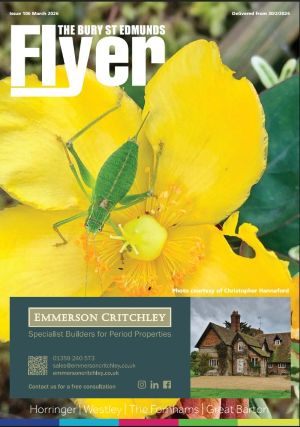
The Bury St Edmunds Flyer Magazine March ’26
The Bury St Edmunds Flyer magazine March ’26 we hear about upcoming community events and updates. And we also hear from local groups, charities and clubs.
In celebration of wetlands
You could be forgiven for thinking that the whole place is going to turn into one big boggy wetland, after the rainfall we have had recently, but fear not, it will dry out and the sun will shine again, as it was when I was writing.
Wetlands though, are vital ecosystems. Special places where water and dry land meet, be it marsh, fen, bog or reedbed, or in our case, floodplain land between our two chalk streams, the Lark and the Linnet. Any land, where water covers the soil or is near the surface for long enough to influence the type of soil, plants and animals found there, is a wetland. They can be permanent or seasonal but it’s the water that influences the ecology. This is different to flooding, which is short term but ecologically stressful. Soils are unstable and farmland crops, which can’t withstand long periods of waterlogged soil, may fail. Wetlands are stable ecosystems adapted to regular prolonged wet conditions.
Water meadows are different to floodplains though may be contained within them. Historical records of Bury St Edmunds and the features you see, even today, such as the grips, and perhaps the remnants of weirs, indicate that our water meadows were indeed true water meadows.
These largely historic and purposely engineered features, deliberately diverted river water onto fields; a carefully managed agricultural tool for controlling flooding. It demonstrated a sophisticated approach to land and water management that was common in parts of England during the eighteenth and nineteenth centuries. By ‘floating’ a meadow early, between Christmas and March, the landowners could reduce the effects of frost, encourage early grass growth and produce a lush pasture for livestock by way of the fertile soils and nutrients deposited. This would have allowed livestock to be overwintered indoors for a shorter period, saving money and resources.
Wetland areas should be valued as an important natural capital resource. They deliver biodiversity and habitat. Animals like otters, water voles and kingfishers breed, feed and rest in wetland sites. A rich reserve of invertebrates, amphibians and specialised plants are at their disposal. Wetlands can purify water, filtering pollutants and sediments and improving water quality downstream; they also act as natural sponges, absorbing excess rainfall then slowly releasing it.
Suffolk, like many other parts of the UK, is threatened by changes in climate. We are experiencing much wetter autumns and winters and long periods of dry weather in the summer. Wetlands play a significant role in both adapting to and mitigating the effects of this change. As climate change increases the frequency and intensity of heavy rainfall events, wetlands provide vital flood storage capacity. The risk and severity of flooding farmland is reduced, crucial to crops and with the obvious benefit to urban areas and communities.
Wetlands moderate local temperatures and maintain water supplies during dry periods building drought resilience which supports both wildlife and human needs. The water resources we have which keep our wetlands wet, need also to be managed for boom-and-bust times ahead.
Above all, wetlands especially peatlands and reedbeds (as well as sea grass, but that’s a different subject) are highly effective at storing carbon. They lock away vast quantities of carbon in their soils and vegetation; this is hidden away from the ravages of an increasingly unstable climate above ground and helps to offset greenhouse gas emissions.
Get in touch with us at www.burywatermeadowsgroup.org.uk or at Facebook Bury Water Meadows Group
Read more of the articles from The Bury St Edmunds Flyer online.
For advertising in next edition, The Bury St Edmunds edition email Steve: steve.powell@flyeronline.co.uk