
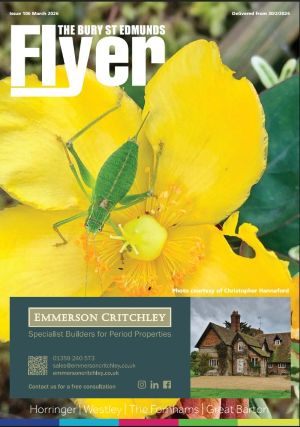
The Bury St Edmunds Flyer Magazine April ’26
The Bury St Edmunds Flyer magazine April ’26 we hear about upcoming community events and updates. And we also hear from local groups, charities and clubs.
Do one thing for wildlife
Nature is at a tipping point. Our wildlife is under more pressure than ever before and without protection, the future of wild spaces like ours here in Bury St Edmunds and the wildlife in them is in jeopardy.
Our wild spaces are not only vital to the fragile ecosystems they support but also to human physical and mental health and are an essential part of our only home. There isn’t a planet B despite what people will have you believe, so we all need to do our small part to help nature thrive.
So as our world wakes up in what is now meteorological spring (as opposed to astronomical spring which is worked out according to when the equinox falls), we can all do one thing (or more if you feel really inspired!) for nature.
Go for a walk in one of the meadows and green spaces in Bury. We have two rivers snaking through our town, the Lark and the Linnet and though much of their floodplain and water meadows have been built on or changed, there are at least 120 acres of riparian land to explore. You might be lucky enough to see a kingfisher darting up the river or a water vole scurrying back into its burrow on the bank. Even otters have been seen on our rivers in recent years. Many plants respond to day length rather than temperature, so notice the plants growing and coming into flower, now that the days are drawing out.
Go wild in your garden, even small parts of it can be more connected for the creatures that live in it. Allow a patch of stinging nettles to grow in an out of the way corner; though remember they do need sun to attract butterflies to lay eggs. Some research will help you find the best ‘larval host plants’ that will benefit our native insects. Many herbs are great at attracting hoverflies and bees. Most wildflowers are beneficial to pollinators, so give them the freedom to flower in the lawn between April and September. It doesn’t have to be a big area just a sunny spot. Put some water in the garden, be it a tub or an excavated pond; aquatic creatures such as frogs, newts, beetles and dragonflies will find it. Being at the bottom of the food chain, their presence will provide valuable food for other animals further up the chain, such as birds and hedgehogs.
Do some community work, help out at a work party or go litter picking. Work parties are a great way to make a difference in the community but also get some exercise at the same time; though if you can’t do that, stand up for nature by joining a local wildlife group. Litter can be dangerous; think of hedgehogs with ring pulls round their necks or dog poo in children’s play areas. It costs councils in England roughly £700 to £800 million clearing it from our streets and open spaces.
Why not also come along to the Bury Wildlife Festival on May 16th in the Abbey Gardens, for stalls, activities, talks and guided walks all celebrating the biodiversity of our green spaces here on our doorstep. The festival continues until May 21st, with an exhibition, Revealing our Living Landscape, in the Cathedral Cloisters.
Read more of the articles from The Bury St Edmunds Flyer online.
For advertising in next edition, The Bury St Edmunds edition email Steve: steve.powell@flyeronline.co.uk